
 FR
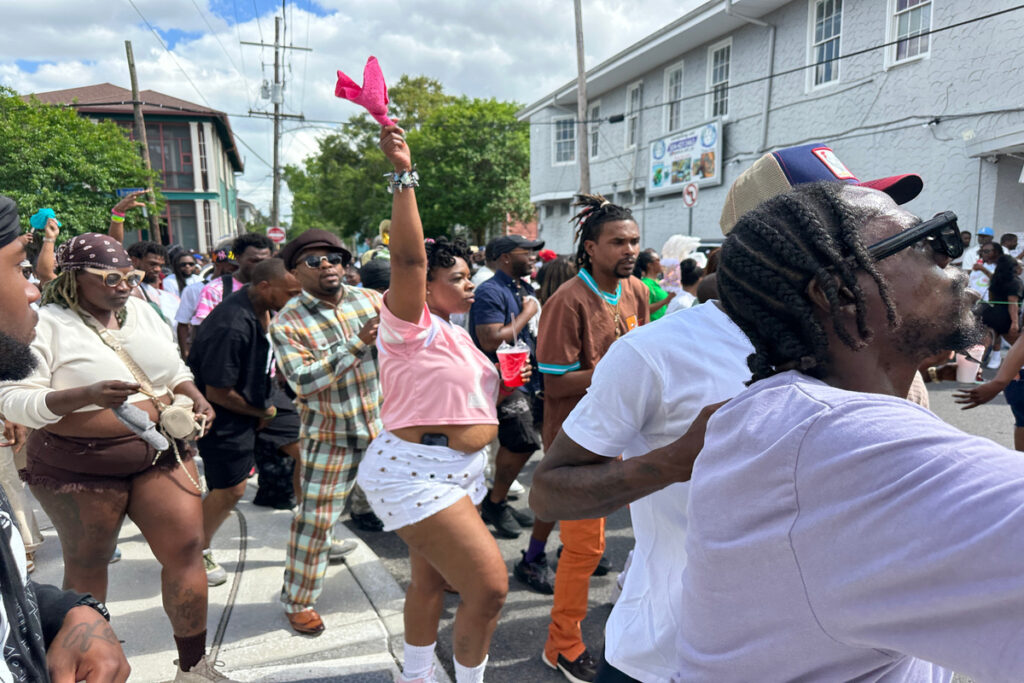
New Orleans. Few cities in the world have shaped the history of music so deeply. Jazz was born there. Blues found some of its most intense expressions there. Traditions from Africa, Europe and the Americas met there and created something entirely new.
But what makes New Orleans music truly unique is not only its stylistic richness. It is the way music is woven into social life. In New Orleans, music does not belong only in concert halls. It is in the streets, at funerals, neighborhood celebrations and weddings. It is a shared language in a city that turned collective celebration into an art form.
This guide explains the main traditions that shape the musical world of Go Go Gris-Gris and Washboard Boogie Bang — together forming one of the richest and most generous musical cultures in modern history.
What is a Second Line?
The Second Line is one of New Orleans’ most iconic and photographed traditions. It emerged in the nineteenth century within the city’s African-American communities and originally referred to the procession following a brass band during a parade.
In a jazz funeral, the brass band leads the first part of the procession — the “first line” — playing solemn hymns on the way to the cemetery. On the return journey, the mood changes. The music becomes festive and danceable, celebrating life continuing after loss. That is where the “second line” appears: the people following the band, dancing through the streets with parasols and handkerchiefs in the air. It is a tradition that transforms grief into celebration and sadness into collective energy.
Since the late nineteenth century, Second Line parades have been organized by Social Aid and Pleasure Clubs, community organizations that developed after the American Civil War to provide mutual aid and social connection within African-American communities. These clubs still exist today, and their annual parades remain important neighborhood events.
Today, the Second Line is part of weddings, festivals, birthdays and community celebrations. It has become a global symbol of resilience and shared joy, inspiring events across France, Europe and beyond.
For Go Go Gris-Gris, the Second Line is not a folkloric reproduction. It is a philosophy. Every concert carries the same idea: music should create connection, make people move and turn an ordinary space into a shared celebration.
Who are the Mardi Gras Indians?
The Mardi Gras Indians represent one of New Orleans’ most fascinating and least widely understood cultural traditions — and one of the most important for understanding the musical identity of Go Go Gris-Gris.
Emerging in the nineteenth century, Mardi Gras Indians are members of African-American communities in New Orleans who create extraordinarily elaborate handmade suits for Mardi Gras. Huge feathered headdresses, intricate beadwork and sequins can take an entire year to complete and often involve the work of a whole community.
The tradition is deeply connected to the memory of African-American resistance. The practice of “masking Indian” refers to historical relationships between Black communities and Native American peoples, including stories of refuge and solidarity during slavery and its aftermath.
Musically, Mardi Gras Indian culture developed its own tradition of ritual songs and percussion performed during gatherings, rehearsals and parades. Call-and-response vocals, organic percussion and living storytelling form a distinct musical language that directly influences the way Go Go Gris-Gris approaches the stage and interacts with an audience.
The washboard: from laundry tool to jazz stage
The washboard is one of the most unusual and instantly recognizable instruments associated with traditional New Orleans music.
Originally, it was exactly what its name suggests: a corrugated metal board used to wash clothes before washing machines became common. In travelling jazz groups of the early twentieth century, it found a second life as a portable percussion instrument. It could replace or complement a drum kit while allowing the musician to move freely during street parades — a practical solution born from necessity.
When worn around the neck like an apron, the washboard can be played while standing or walking, even while singing. It is scraped, tapped and brushed with thimbles, spoons or other metal objects, producing a dry, distinctive percussive sound unlike anything in a conventional drum kit.
Within New Orleans tradition, the washboard is closely linked to mobile street music and brass-band culture. Its presence gives a group an immediate visual and rhythmic identity.
For Washboard Boogie Bang, the washboard sits at the heart of the project. Its strong visual presence and unique sound make each performance instantly memorable.
Boogie Woogie, Blues and Swing: the roots of the groove
Boogie Woogie developed in the late nineteenth century in bars and juke joints across the southern United States. It is a piano-driven style built around a fast, syncopated left-hand pattern — the walking bass — while the right hand improvises freely. Physical and irresistible, boogie woogie is first and foremost dance music: it exists to make people move.
Blues is one of the most direct and fundamental musical traditions in American music. Emerging in the Mississippi Delta, it carries the complexity of African-American experience — pain, resistance, irony, endurance and joy. Its twelve-bar structure is one of the most powerful musical frameworks ever created, capable of expressing an extraordinary range of emotions within a simple form.
Swing became the sound of the big-band era in the 1920s and 1930s. Light, elegant and danceable, it helped bring jazz to a worldwide audience and gave rise to Lindy Hop, the dance born in Harlem that is still practiced around the world a century later.
How Go Go Gris-Gris and Washboard Boogie Bang carry these traditions forward in France
Go Go Gris-Gris and Washboard Boogie Bang do not simply reproduce New Orleans music. They bring it to life through their own backgrounds, personalities and influences, while keeping the same fundamental conviction: this music is alive, and it still has something powerful to say to contemporary audiences.
Every concert is an opportunity to introduce or reintroduce the Second Line, Boogie Woogie and Mardi Gras Indian traditions to people who may never have encountered them before. The bands do that in the most direct way possible: by playing, creating movement and inviting the audience into the music rather than leaving people outside it.
Listen to the bands. New Orleans culture continues because each new generation of musicians chooses to engage with it, respect it and keep it moving. Go Go Gris-Gris and Washboard Boogie Bang bring that spirit to stages and events in France and Europe.
New Orleans music FAQ
Q — Can you enjoy New Orleans music without knowing jazz or blues?
A — Absolutely. New Orleans music is physical before it is intellectual. You do not need to know the history of jazz to move to a Second Line or smile when a boogie starts. That immediate accessibility is part of what makes the music so universal.
Q — Is the washboard a “real” musical instrument?
A — Definitely. Within New Orleans traditions, the washboard is a fully developed percussion instrument with its own techniques, specialists and virtuoso players. Its sound is immediately recognizable, and its history is inseparable from American street music.
Q — What does “gris-gris” mean in the name Go Go Gris-Gris?
A — “Gris-gris” is a term associated with Louisiana spiritual and folk traditions. It refers to a charm or talisman believed to attract luck or offer protection. In the band’s name, it reflects the positive, slightly mysterious energy carried by the music — something small that can hold surprising power.
Q — Can people dance Lindy Hop at a Washboard Boogie Bang concert?
A — Yes. Washboard Boogie Bang plays for dancers as well as listeners. If you want to include Lindy Hop or swing dancers at your event, the music fits naturally and audiences usually love it.